Dispatch from an Australian Summer
Feeling the heat on several fronts
The searing heat, seemingly fan forced from the north, crashed into the building cooled by air conditioners, sealed windows and the low mechanical hum of summer indoors.
Outside, the day roared. Inside, it stalled. The contrast landed with the blunt force of impact, registering before it could be named, a reminder that this season, summer, no longer arrives gently. In all its various facets, it pushes, it intrudes and demands attention. It’s not like it once was.
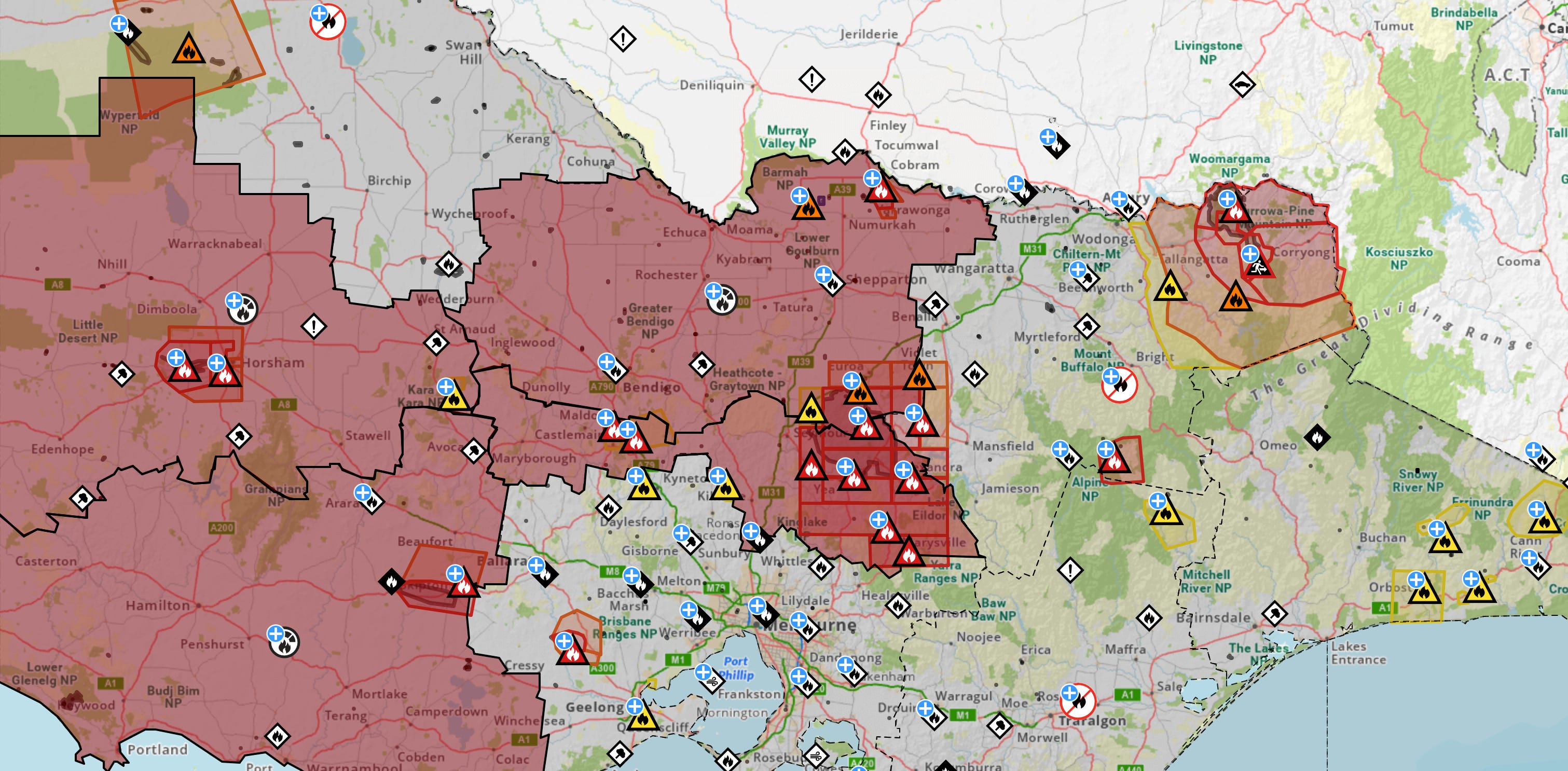
Insulated, I was working on a podcast with friends, perched between screens and half-finished thoughts, recording voiceovers and shaping scripts for episodes still finding their form. In between that work I was transfixed by the screen for another reason, drawn into a vigilance I couldn’t switch off. The compulstion to track a bushfire that without remorse, let alone sentimentality, was menacing the places of my childhood, threatening homes and lives in the inescapable forty-five degree heat that made it what it was; a killer.
January once held the promise of a pause. In warm blue days gone by, the country would collectively exhale, step back from itself, at least for a few weeks, pretend that the arguments of the previous year could be set down like tools left in the shed waiting to be thrust into action after the consumption of the festive season had past.
This year, that pause never materialised. The calendar turned, but the mood did not. The watchfulness that arrived in December stayed put, as if there was no longer a safe moment to look away from a world that could lash out at any moment, in any time zone.
Even the language of rest felt out of place. We would say we were having a break, when we knew there was no chance of a real period away from it all, with everything breaking aaround.
Streets were quieter, but not calm. In the December and early new year light, public spaces were occupied differently, people moving through heat with the efficiency of those conserving energy. Authority was more visible, police armed with machine guns at the cricket to remind us who is in charge and that we should be afraid of others, With that visibility came an unspoken instruction to brace for what lay ahead.
Against that backdrop, the scenes from the Longwood fire, funnelled relentlessly through every screen and device we carry, landed on a country already reeling.
The images of despair and the charred remains of homes once full of life, came on the back of the horror at Bondi, before grief from that murderous day had found language or space befitting the victims, before shock had loosened its grip.
Helplessness, already present, deepened. Summer, which once suggested permission to slow, had become something else entirely. The days did not open out, they pressed in, and relief after a hard year never quite arrived. Replaced instead by a state of readiness that settled in, constant and fatiguing, as if standing down was no longer an option anyone was willing to abide.
That readiness was not confined to the personal. It was there in the background grind of public life, in the sense that the country itself had not stood down after the year that was. Campaigns were launched, demands made and accusations run wild. What should have been a period of easing felt more like a continuation, as if the arguments, anxieties and unresolved questions of 2025 had simply carried over, heat-stressed but intact, into the new year.
This summer has been marked by a kind of acceleration without clarity. Decisions which turned into law, impacting all of us, were rushed through under the cover of urgency. Framed as necessary responses to rising tension but rarely afforded the time or care they demand. The laws created, supposedly in our name a for the good of our protection, ended up fraying the edges of freedoms we thought were rights in a democracy like ours.
New hate speech laws, drafted and passed with remarkable speed, arrived wrapped in the language of protection and order, yet left those who were paying, attention uneasy about their breadth, their intent and the precedent they will set. The promise of safety sat alongside the growing concern that the ability to stand up for simple truths had just become more thwart. The complexity to address the world, to push back against it, on our own terms when need was being sacrificed fpr the optics of decisiveness. Fear was being allowed to do the work that deliberation should.
At the same time, the political architecture that once shaped opposition has given way.
The Coalition, long a fixture of Australian political life, has collapsed under the weight of its own contradictions when it reached instinctively for division when restraint was required. If ever the idea that you reap what you sow applied, it applies now to the Liberal and National parties, now facing the consequences of years spent feeding fracture.
That collapse feeds the atmosphere of this summer: laws rushed through without care, alliances splintered, language sharpened until it dulled itself; restraint abandoned in favour of speed and force, all whole trust in our own democracy continues to erode.
It is in this context that the country edges once more and once again toward Australia Day, or Invasion Day, depending on where you stand and how much distance you are willing to put between yourself and history.
The date no longer arrives as interruption but as inevitability, a sigh which draws the same arguments back into the centre things with a force that is both predictable and exhausting. The national conversation narrows and oxygen drawn away from everything else that demands attention.
The culture wars that gather around the day are often framed as existential, as if the nation’s future hinges on slogans, flags and terminology alone.
In truth, they are disagreements that only the opulent can afford, arguments conducted at a remove from lives where crisis is not theoretical but constant.
While the country rehearses the same symbolic battles, the emergencies that do not pause for public holidays continue unchecked: housing stretched beyond reach, systems under strain, a climate growing more volatile, and violence that does not abate simply because the calendar demands celebration.
Let’s look at what spectacle displaces in the national conversation.
On Invasion Day itself, domestic violence in Aboriginal communities does not ease. Aboriginal and Torres Strait Islander women are hospitalised for family violence at rates dozens of times higher than other women in this country. They are killed at vastly disproportionate levels, suffer violence at rates that would constitute a national emergency if they touched any other population, and are far more likely to die as a result of assault. Most of this violence is never reported. It is carried quietly, absorbed into daily survival, rendered invisible by shame, fear and systems that too often fail to respond.
These are not abstractions. They are the costs incurred while the national conversation circles itself. Year after year, the argument over the date fills the air, drawing oxygen away from crises that are immediate, material and lethal. Like bushfires, these debates burn hot and indiscriminately, destroying what they touch and leaving behind damage that cannot be wished away once the smoke clears and leave behind landscapes of damage that take far longer to recover than the argument itself ever lasts.
What breaks is not easily repaired, and what they displace rarely returns unchanged. Like the landscape the wounds take generations to heal. If this is a concept easy to understand, then why isn’t intergenerational trauma, which lies at the heart of the emergency facing Aboriginal Australia.
For Aboriginal people, this is not a theoretical exercise but an ongoing condition, a beginning that never ended. The fixation on how the day is named or defended does more than distract; it displaces the harder work of reckoning with what followed and what continues, allowing symbolic battles to crowd out substantive change. While the country congratulates itself for enduring the argument, deeper pressures build beneath the surface, none of it registering as crisis until it is too late to pretend it arrived suddenly.
The challenge ahead is not simply one of allegiance or ideology, nor is it resolved by winning an argument about a date on the calendar. It is a question of conduct. Of whether we can hold complexity without retreating into performance, whether we can attend to what is burning now rather than arguing endlessly about smoke.
Perhaps it feels more pressing because summer strips the country of its alibis. The distractions fall away, the noise peters out, and what is left is a reckoning with who we are when comfort can no longer cushion consequence.
What comes next will not be shaped by the arguments we rehearse each January and by the rehearsed reflexes of the poltical class. What is to come will be configured by whether we choose to meet the crises already upon us with honesty, care and resolve, before the heat returns, in all its guises, to tests us again.
Take care out there today. It’s going to be a hot one.


“whether we can attend to what is burning now rather than arguing endlessly about smoke.” Ooph. Excellent thoughts and words here Daniel James
It's soul-splintering but you're entirely right on all counts: exhausted hypervigilance, jittery, dispirited, watching panicky premature half-cocked interventions, criminalising dissent, then bracing for -- as you brutally frame it -- the overacted rehearsing of superficial 26/1 symbolism/rhetoric to pull focus from unaddressed decades-deep systemic wicked problems.