I've checked out, well…kind of
Why I removed myself from the national conversation.
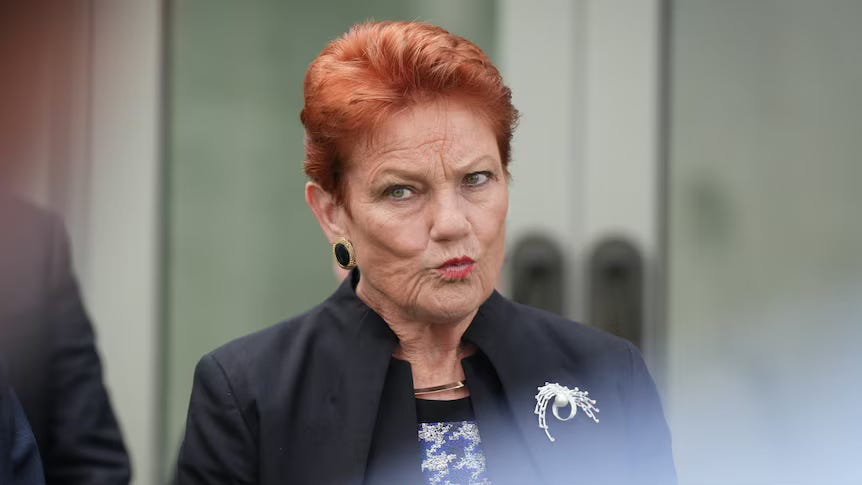
As Pauline Hanson goes on Australian national television to let us know there are no “good” Muslims, I wonder how I came to not react as I once would have. In the aftermath of her comments, it was Nationals senator Matt Canavan that questioned her ability to lead a major party and branded her ‘un-Australian’. It’s beggars’ belief that we are at a juncture in modern Australia that a Nationals senator is calling Pauline Hanson out in defence of Muslims and I can barely finish reading an article about it. Only a few short years ago I would’ve had my head on a swivel trying to read the comment section, every letter to the editor or subsequent follow up news story…Alas, this girl is simply not interested in partaking in that way anymore.
During my time as a journalist, I have found myself on the other end of unsavoury opinions and downright bigotry. I remember once covering a Christmas day story in 2023 about a free Christmas lunch for those who found themselves alone on such a social occasion usually spent with close relatives whether you liked them or not. It was here, about an hour away from Melbourne, I found myself doing my due diligence as a junior reporter for the Age. It was my second December period on the roster and while I didn’t cry on the way to the interview from the shock that I was doing the drudge work as I had the previous year, I was rightly annoyed and suffering from a severe case of FOMO.
I don’t celebrate Christmas as a Muslim, but it’s still a public holiday and the silly season is a time where we all shed the stress of another year and let loose, irrespective of faith. It is the reality of living through a major holiday in a foundationally Christian country. I arrived at the Church, and the bustle of volunteers was enough to boost my mood. There were people of all backgrounds there, Indians, Filipinos, Chinese and Anglo-Australians, singles, families. I was happily interviewing a medley of good people, hearing their reasons for volunteering at the lunch or attending it. I spoke with the organiser, a lovely older man, whom I had already pre-interviewed. He was beaming with the excitement of a successful event that brought the community together. I understood that feeling well having organised many religious events for Eid and Ramadan for the public.
There is no greater feeling than watching a day you have planned down to the smallest detail unfold effortlessly. But the elephant in the room was that while a joyous Christmas was happening in this part of the world, in Jesus’ birthplace of Bethlehem- a place I had just returned from during my own pilgrimage to Jerusalem a few months prior- it was the most solemn of affairs with celebrations cancelled due to the ongoing Israeli bombardment of Gaza. The war, at that point, was dominating the headlines and rightly so, the death toll was well close to 30,000 people many deaths were children, premature babies were being left in incubators to die, and western media’s ethical collapse was driving social media and the rest of us all a bit mad. They say the first casualty of war is the truth, I’ve come to learn that the first casualty of war on Palestinians is empathy.
After a few routine questions about the lunch, I asked the organiser, a man of faith, ‘How does it feel to celebrate knowing what’s happening in the Middle East now, the Pope has been pretty vocal, is it a sombre affair for you?’ His smile quickly turned to a frown, the disdain rich in his expression before saying, “Well, the Palestinians all want the Israelis dead so it’s inevitable.” I was shocked beyond words; I felt my face flush and my eyes begin to water. At that moment I felt I was in unfamiliar waters. How do I move on from this? What’s the segway? It was all a blur, but I remember challenging him on it very briefly (I still had a job to finish) but ultimately pivoting to another question. It was so heartless of a statement particularly in the period of history we were living in that I felt real sorrow at what had become of human decency. The unconscious proverbial olive branch that is so common when two people of different faiths meet felt as if it had been set on fire.
Three years on from that incident, the world is in terrible shape. I have experienced a level of public hatred while wearing a hijab that I had never encountered with such frequency before. I’ve had a group of boys in a car roll the window down and yell terrorist a few days after the horrific Bondi attack. I’ve copped racial slurs twice on my innocent pursuit of reaching 10k steps in my multicultural inner west suburb. More privately, I have felt let down by friends I once considered decent people, who now use their dislike of immigration to push the idea that they are personally under attack. “It’s just happening everywhere, I don’t see any blondes anymore,” one said. It was spoken casually, almost conspiratorially, as if I were somehow exempt as if I were “one of their own.” Others try to soften it. “It’s not people like you,” they assure me. “Your family’s been here forever.” The qualification is meant to comfort. Instead, I question if they are the types to sneer at me in public or yell abuse from a moving vehicle.
My recent experiences have been extremely unsettling and wildly inconvenient to the narrative I had told myself for a long time- that if we spoke to one another properly, we’d all be better for it. I don’t believe this is false now, but I certainly don’t find it to be the silver bullet that I once did. I don’t believe that the most maligned by society should engage in routine debate with those who wish to debate them out of existence or accept that one’s opinions shouldn’t disqualify them from friendship.
I have found that I simply do not have the desire to partake in the dialogue the way I once did. I have quietly quit from discussing certain topics with certain people and have learned to expeditiously move on a conversation when I think it’s going into bad faith territory. The type of back and forth that requires me to plead to this person’s morals to see eye to eye where the disagreement should have ended based on the legitimacy of facts I presented. Now, if friends I have previously talked about immigration laws and challenged their simplistic outlook on them truly believed what they said to me, I just nod and go ‘ok’ and exit the dialogue. If a stranger thinks I deserve to be accosted for practicing my faith, I will respond with a polite ‘fuck you’ and walk away (I’ve yet to do this). It’s not so much about opting out of legitimate chances to have real conversation (that, I will always cherish) it’s that I’ve arrived at a place where my patience for racism being masqueraded as political thought has run out.
The late and great Black American writer Toni Morrison famously said, “The very serious function of racism is distraction. It keeps you from doing your work.” And I have been in the clutches of that distraction before. It drains you. It makes you paranoid. It pulls at your humanity and your reason. I also find another quote coming to mind by bell hooks, who asked, “How do we hold people accountable for wrongdoing and yet at the same time remain in touch with their humanity enough to believe in their capacity to be transformed?”
Today, Morrison’s reminder feels like the more honest place I have arrived. Checking out feels like I’m reclaiming the fullness of my own humanity without any concessions, and with that has come a great peace.


Thanks for writing. Check out just enough to protect your heart. You are important, your writing is important.
Thank you for this piece