
Setting the Stage
Why the Victorian Treaty is not just a political moment, but a moral and literary one.

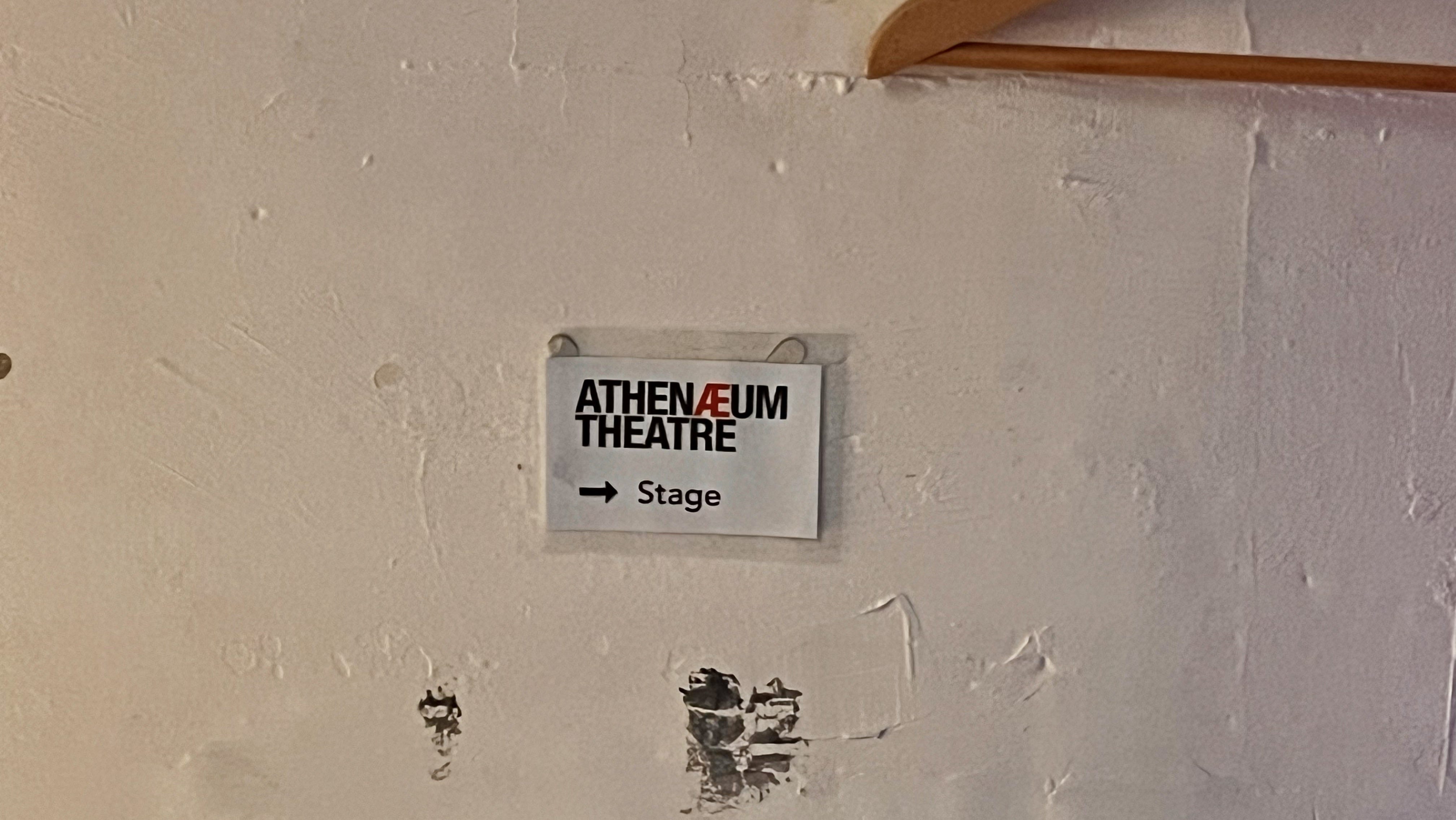
I was fortunate enough to be asked to present some opening remarks about the event I’m curating for the Melbourne Writers Festival on its opening night at the resplendently dilapidated Athenaeum Theatre on Thursday. I was given a chance not to only speak about the event, but to speak about the moment Treaty finds itself in.
DJ x
The Athenaeum Theatre 07 May, 2026
Good evening.
I’d like to begin by acknowledging the Traditional Owners of the land we meet on tonight, the Wurundjeri Woi Wurrung people of the Kulin Nation. I pay my respects to their Elders, past and present, and to all First Peoples here tonight.
It is a great honour to be here on the opening night of the Melbourne Writers Festival.
A writer’s festival is, in many ways, an act of faith: faith that words still matter, that stories can still move people, and that a room full of strangers can gather in the dark and leave with some new understanding of themselves, each other, and the world they have inherited.
This year’s theme, I’m told, is Visions and Revisions, and I love that, because every act of writing asks us to look again: at what has been written, what has been remembered, what has been left out, and what has been deliberately obscured.
For First Peoples, this is not an abstract question.
So much of this country has been built on stories told too narrowly, by those who mistook possession for truth and power for permanence.
The story of Victoria, the story of Australia, has been written as a march of arrival and settlement, of progress and prosperity, of maps drawn, cities raised, laws passed and futures promised. There’s something in that for those who benefited from it. But beneath the confident language of nation-building, another story has always endured: older than the state, deeper than the archive, and more truthful than the version we were taught.
It is the story of sovereign peoples whose law, memory and knowledge endured invasion, the false promise of places once imagined as safe harbours, and the long forces of forgetting. Through it all, families found ways to carry what mattered and pass it on.
And now, in Victoria, we are living through a moment where that deeper story is not just being remembered. It is being written into the civic and cultural life of this state.
Treaty is often spoken about as a legal or political process, and of course it is both. But it is also a literary and moral act. It asks us to return to the founding story and see it more clearly; to imagine a different relationship between First Peoples and the state; to understand history as something still moving through our institutions, our suburbs, our language, and our sense of what is possible.
And we should be honest about this moment: decades of aspiration and the last ten years of hard graft are not safe from the laziest instincts of politics. Treaty will be tested by those who find opportunity in fear, operatives who reach for division because it is easier than truth, and who would turn a historic act of repair into another weapon in the culture wars; divisive rhetoric sprayed at us, in lieu of policy. But that only reveals the seriousness of what is at stake. Treaty asks more of us than slogans. It asks for patience, courage, and a willingness to stay with the truth.
That is why the event I’m curating for this Festival, Making the Victorian Treaty, matters so much to me.
At high noon on Saturday at the State Library, I’ll be joined by two people who have been central to this moment: Ngarra Murray, a Wamba Wamba, Yorta Yorta, Dja Dja Wurrung and Dhudhuroa woman and former Co-Chair of the First Peoples’ Assembly of Victoria, and Nerita Waight, a Yorta Yorta and Narrandjeri woman, CEO of the Victorian Aboriginal Legal Service and lead negotiator for the Assembly in its work with the state.
Together, we’ll look beyond Treaty as a landmark and consider the generations of labour that brought it into being: the relationships, responsibilities and hard-won truths carried into the room by people who imagined this moment before it was politically convenient, legislatively possible, or widely heard.
And that, to me, is where the festival’s theme becomes so powerful.
A vision is more than a dream; it is something you keep faith with, even when the world is not ready for it. And revision does not mean erasure. At its best, it is the courage to look at the old version and say: this was incomplete, this caused harm, and this cannot be the story that carries us into the future.
So we must write again.
That is why writers and storytellers are the tip of the spear when it comes to this work. They sense when an old story can no longer hold, give language to what has been carried in silence, and help a community imagine itself anew. That is the work before us: to listen more deeply to what has survived, to make room for truths that were pushed to the margins, and to find the words that might help carry us into a more honest future.
My hope for the Treaty event is that audiences come not only to feel the weight of this moment, but to understand the human work behind it. I hope people leave knowing Treaty is not something separate from them. It belongs to the story of this place, and to all of us who live here and are willing to face what that means.
Opening nights are usually about beginnings, but tonight I’m thinking about continuities: the stories that began long before us, the stories we inherit, the stories we revise, and the stories we now have a responsibility to carry forward with greater honesty, courage, and care.
So let this Festival be more than a celebration of books and ideas. Let it be a place where we practise the kind of attention this moment asks of us, where we listen more deeply, resist the comfort of old evasions, and leave with a renewed commitment to the stories that might yet make us larger, braver, and more truthful than we have been.
Because words can open something in us; they can move us out of comfort and towards a future worthy of those who fought to bring us to this point. And perhaps that is the true promise of Visions and Revisions: not simply to see the world again, but to find the courage to remake our place within it.
Thank you to Melbourne Writers Festival for making space for this conversation.
And thank you all for being here through its continuum.
Thank you.