The Myth of Monoculture
Pauline Hanson’s fantasy of sameness ignores the oldest truth of this continent.
The first monocultural project on this continent was not multiculturalism’s defeat. It was colonisation’s ambition.
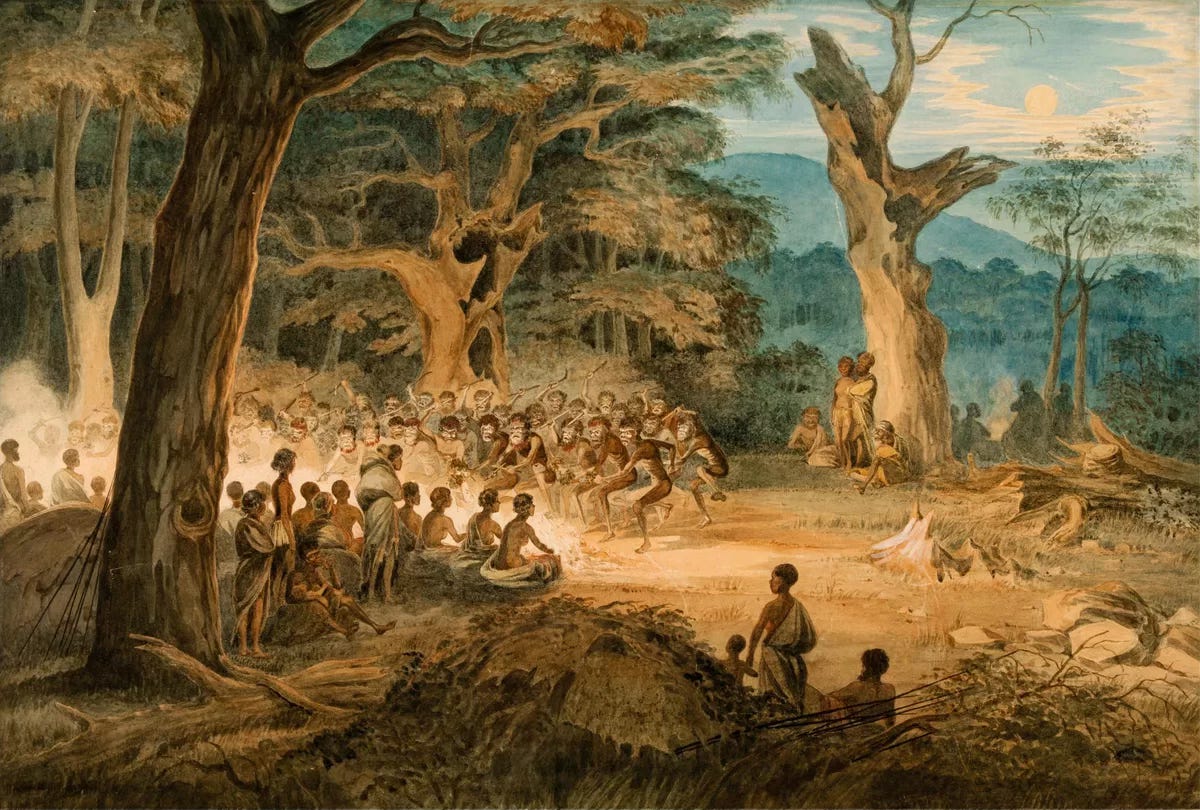
For tens of thousands of years, this continent has been a multicultural one. A myriad of nations and clans, as diverse as the landscape itself. Made up of around 250 languages with 800 dialects. Each nation had its own lore and justice. Trade routes, in the form of songlines, scrawled across the breadth of the country, where diversity was not only acknowledged but was embraced through smoke and ceremony, corroborees the peak of cultural exchange gifts were shared, disputes settled and peace maintained.
While every nation had its own origin story, invariably at the heart of each was the revelling of land, water and skies. An understanding born through millennia of brutal experience that the people of this continent were beholden to the ecosystem in which they lived, not the other way around.
These ancient understandings, settled in the dust of the continent were kicked away into the wind in the times that followed the arrival and then invasion by Europeans. In the breaking, most of those languages, to be found nowhere else and unique to the land they reverberated off , were lost, appropriated or destroyed. Words and phrases that explained this place through time and seasons never to return.
With blinkers on, the colonial project set about to cementing itself as a monocultural set of outposts. Hanson can look to some of the early work of the Victorian colony when it tried to erase First Nations culture from the earth, as a how-to guide to achieve her required state. The grand ambition, the attempted eradication of multicultural society(s) in order to supplant all that was before with a monoculture.
Truth Be Told, the Official Public Record from the Yoorrook Justice Commission, detailed the transition from theft and slaughter for land, to something that was far more palatable for the colony, but just as devastating for First Peoples:
“The colony’s preoccupation shifted from Aboriginal land to Aboriginal blood. Once the land had been fenced, surveyed and renamed, attention turned inwards, to the bodies and lineages of those who remained. Clerks, with their ledgers and laws, decided who belonged.
The Aborigines Protection Act 1886 (Vic) was a mechanism for disappearance disguised as a means of governance. The colony had decided that First Peoples would need to be made to vanish. This was premeditated cultural elimination.
The 1886 Act—or so-called ‘Half-Caste Act’— redefined who could legally be considered Aboriginal. Those of ‘mixed parentage’ were ordered off missions and reserves; no longer entitled to rations after a transition period, nor government support unless they were granted a licence to live at a prescribed residence. The government would decide who belonged and who did not. Aboriginal people had no means with which to resist the labels imposed upon them. It was the torture of not being allowed to be yourself.
The government called this a path to independence. It was, in fact, a sentence of abandonment. Those expelled from reserves were expected to support themselves in a society that did not want them. As Aunty Alma Thorpe (Gunditjmara) told Yoorrook, it was ‘a different type of death’.
The effects of these policies reverberated far beyond the immediate loss of land. Families were scattered, often with little hope of reunion. Communities fractured under the strain. Intricate ties to Country frayed under this relentless pressure.
The 1886 Act was crafted to dismantle the cohesion of Aboriginal life. And its consequences are not confined to history. The dispossession and disruption it caused have left deep imprints on the lives of First Peoples, shaping both the intergenerational grief and resilience that endure today.”
Who knows what methods Hanson and her rich backers plan to unleash to bring their dystopian utopia to life, but this is how it was done first time around, and it nearly worked.
It wasn’t too long ago that Hanson super-backer Gina Rinehart’s father Lang Hancock cracked open the colonial playbook when he suggested, “The ones that are no good to themselves, can’t accept things, the half-castes and this is where most of the trouble comes, I would dope the water up so that they were sterile and would breed themselves out in future and that would solve the problem.”
It’s basically what the half-caste act attempted to do.
That was his approach to the Aboriginal question.
These aren’t the tides, but they are the currents the national conversation is drifting and swirling around when an increasingly larger number of people see immigrants, refugees and people from the world as less than human. A problem to be solved rather than a humanity to be engaged.
*
While Hanson, despite her record popularity, is still seen by large sections of the media as a curiosity, a bell and whistle sideshow. The overall meekness and mainstreaming by a significant cut of the corporate media in coverage of her appearance at the National Press Club, doesn’t match the threat her desolate aspiration for this country presents. It has bewildered those whom recognise this moment as a potential forever point from which there is no return if her vision comes to fruition in order to dulcify the best parts of us. The reportage doesn’t acknowledge the moment or true history of what this place has always been in all its scope.
Instead, there’s a propensity to talk about her presentation, her look and her ability to get through it all. “She did well”, “she didn’t flounder”, “she knows how to work a camera”, were all observations that flowed freely through the press core in the early hours post her address.
These things may or not be true, but they are not the point. Just because her extremism is popular, her grievances hitting their mark in an unjust world; doesn’t mean the language to explain the popular right’s ascent should be business as usual. It would appear no lessons have been learnt from the normalisation of Trump, even a decade into his political career. Reporting on Hanson’s toxic rhetoric shouldn’t be reported like a stoush over Capital Gains Tax or whether to temporarily cut the fuel excise. This moment and what is stake is beyond the performative outrages of the 24 hour news cycle. But it’s there it will stay.
*
Hanson’s yearning for a bland, culturally flat nation, isn’t some yearning for the past, because that past that never existed. It’s actually a clear vision of future the far right wants to bring to life; a cultural hellscape; the ultimate boiling down of our democracy for the vested interests that have aided her rise.
It’s not a return to tradition, it’s a continuation of something that Aboriginal people know better than anyone that colonial ambition has never really left us.
It’s merely been interrupted by multiculturalist policies and the gradual maturing of a nation that was on the verge of being comfortable with its place in the world. But for us, the First Peoples of this land, it has come at us in many guises; protection boards, policies of erasure, assimilation, sterilisation practices and ruminations, the spirits of which are now slickly encompassed in the language of Australian values and patriotism.
In the process of returning us to the most basic instincts of colonialism the result is to reduce complexity, ignore nuance, steamroll diversity and decide who is heard, who gets to speak and gets a share in the Australian dream.
In this climate, it’s difficult to have legitimate political debates with any decent measure of maturity, and that well suits the Hansons of the world .
All of this even though the land on which we all call home, is home to the oldest multicultural experiment in human history.
The tragedy isn’t Pauline Hanson’s ignorance to the lessons of this place. It’s that so many of the people that now follow her seem to have forgotten them.