
Words in More than Black and White
A deeper look at Tony Abbott's London speech.

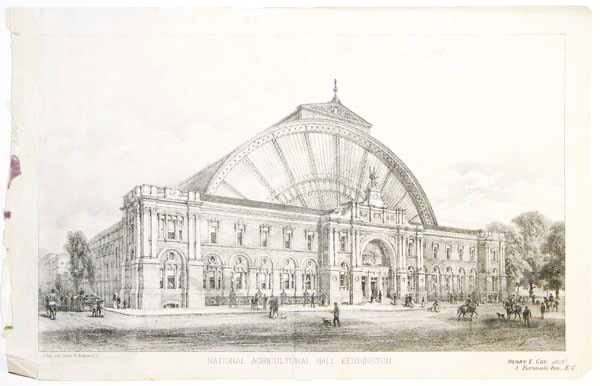
The Olympia Exhibition Centre in London, now rebadged as Olympia London, was opened in 1886, at a time when the might of the British Empire was unquestioned. By the time Olympia held its first exhibition, the empire spanned one-fifth of the planet’s surface and approximately one-quarter of the world’s population were branded British subjects.
It would have seemed to many of those living in the pink areas of the global map that it was going to be that way forever. That was until the dawn of the twentieth century, a period that would see its slow decline through world wars, the Cold War, the diminishment of its economic clout and the rise of new superpowers across oceans it once commanded.
One hundred and forty years on, the descendants of empire descended on this monument to imperial confidence for the Alliance for Responsible Citizenship (ARC) conference in 2026, where the conference program declared:Alliance of Responsible Citizenship
“This conference is a call to the builders. To those who choose gratitude over cynicism. To those who see calling, not catastrophe. To those who create, not complain. To those committed to human flourishing. The decisions we make in the coming years will shape the world for generations. This is our invitation. Welcome to the Age of Reconstruction.”
Ostensibly, it was a call to unite in order to stop the rot, to restore the values they consider made Western civilisation, and by association them, great, and to consider what could or needed to be done to make it great again.
The slate of speakers across the three-day event featured some of the world’s most prominent conservative minds, with Nigel Farage, Boris Johnson and US House Speaker Mike Johnson among those at the altar. Australia had its own fair share of thinkers on the stage and at the lectern. Scott Morrison, Peta Credlin, Chris Uhlmann, Bridget McKenzie and Greg Sheridan were all there, just to name a few.
Their speeches and musings bounced off and around the wrought iron and glass of the great hall and, in the main, that’s where their utterances and proclamations stayed. The content of the conference itself was largely ignored here in Australia, outside the usual echo chambers. The exception was a speech made by our 28th prime minister, Tony Abbott.
It was before this audience of conservative luminaries that Abbott presented, now reborn as the vocal Liberal Party president.
It’s because of his new role, and the ferment breaking down the starch of our political order with much of the same rhetoric, that Abbott’s words once again become consequential in the public life of this country. That’s why we must pay attention to them.
The rise of the populist right across the Western world and then, eventually, here in Australia, Abbott’s adopted home, has changed politics itself and provided opportunities for opportunists everywhere. Debates rage in online forums and on the airwaves across the country about migration, monoculture and Australian values. Those of us well acquainted with the language of division, the language of othering, immediately recognised the tone and tenor of his speech for what it was: an ode to white nationalism and a clarion call to fight against the great replacement, at a time when the soul of the country is undergoing a reckoning.
*
Abbott’s speech was full of the language of appeasement and atonement; quasi-religious arguments aimed at mounting the theory of the great replacement: a plot by “cultural elites” to promulgate mass migration from non-Western countries and eventually replace their white populations.
“But for those with a grudge against their own country,” Abbott argued, “it’s sustained mass migration, especially from countries with quite different cultures, that’s the surest and swiftest way to change and punish a place that’s irredeemably tainted by unforgivable sin.”
The “unforgivable sin” Abbott refers to, in Australia’s case, is the attempted erasure of an entire people, while colonies of Britain supplanted themselves on Aboriginal land and plundered it for all it was worth, without apology and without guilt. To compensate for that sin, he argues is, “the way for supposedly unjustly rich countries to atone for their white privilege and to apologise to poorer ones by becoming more like them.”
To emphasise that he’s not merely talking about the institutional foundations of Australia, but its white racial foundations, Abbott argued: “This (migration) is done in order to dilute and eventually to extinguish the Anglo-Celtic core culture and the Judaeo-Christian foundational ethos.”
He doesn’t mention that without migration and those wanting to come to Australia for a better way of life, our economy would stagnate and many of our essential services, from health care to aged care, would simply fall over without workforces sourced from outside our borders. Abbott has never let reality, economic or otherwise, get in the way of his passion for culture warring.
To highlight the threat to white society, Abbott uses colour in a metaphorical and literal sense in front of an audience well versed in the code of white nationalism. “Blackening a country’s history is one of the most effective ways to undermine the morale of its people.” To this effect, he tries to turn one of the myriad of infamous atrocities committed against First Peoples into proof that colonialism on the Australian continent was, and is, exceptional.
“And yes,” he begrudgingly acknowledges, “there was conflict on the frontiers of settlement.
At Myall Creek, in northern NSW, a group of stockmen brutally murdered up to 30 Aboriginal men, women and children. But there was a sequel. Eventually, seven white men were hanged for the murder of black people—in Australia in 1838—at that time almost unparalleled in any settler society.”
Abbott is right that the executions of the colonial perpetrators were extraordinary, but they were not unparalleled. In fact, the singularity of Myall Creek cuts against the argument he is making. It is remembered not as proof that colonial justice worked, but as evidence of how rarely it did.
*
“Extinguish.” “Dilute.” “It’s the plan.” “Mass migration from the global south.” These are the words of racial purity, the language of people imagining themselves as contaminated by the presence of others.
Ultimately, there is something perverse about the heirs of empire, beneficiaries of its power and wealth, now speaking as if they are the dispossessed, the ones under threat. That grievance fuels much of what we see today. It is the engine driving the othering of our fellow citizens, turning sections of our community into people to point at and blame.
As a First Nations’ man and someone that has studied and written about the world Abbott and his ilk celebrate with thinnest veils of scrutiny, I know what cultural erasure looks like. I know its lasting impacts, and I know the toll it has taken on so many to not apportion blame and guilt, but to correct course in hope of better days ahead for our ancestor’s children
Those who dismiss this language as “Tones merely being Tones”, don’t have to accept my argument here, but that should at least dedicate themselves to listening a little more closely to what he is saying and the language he is using to say it.
We expect a great deal from the fourth estate, but surely, it’s not too much to treat speeches like Abbott’s, at a time like this, as more than something awkward for the Liberal Party to deal with; merely a political problem, another mark against a floundering opposition struggling in the polls, rather than something of greater substance and consequence for Australia in all its multitudes.
With no doubt an eye on political redemption, Abbott is now the outspoken federal president of the party that has governed Australia for most of its federated history, one that has overseen large swathes of the “mass migration” he seems to detest. That same party is toying with leaping even further towards the extremities of the right and, in doing so, burning down its own legacy and commitment to a multicultural Australia. It’s a form of self-destructive hubris that has torn down empires, let alone political parties.
In London, Abbott made his speech to an audience that well understood every word in all their evocations very well. The question now is whether the rest of us are prepared to listen and understand them too.
You can read Tony Abbott’s speech here.